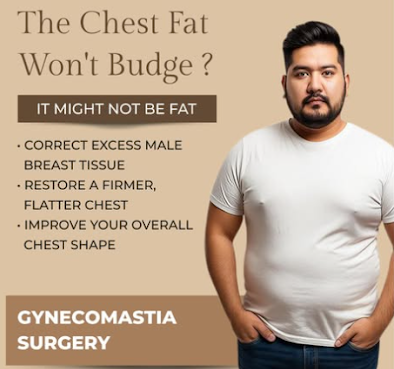
Many men struggle with stubborn chest fat that simply doesn’t go away—no matter how much they diet or exercise. This can be frustrating, especially when the rest of the body responds well to fitness efforts, but the chest area remains unchanged. What most people don’t realize is that in many cases, it’s not fat at all. It could be a condition called gynecomastia, which involves the enlargement of male breast tissue. Understanding the difference between chest fat and gynecomastia is the first step toward finding the right solution.
What Is Gynecomastia?
Gynecomastia is a condition where glandular breast tissue increases in men, leading to a fuller or swollen chest appearance. Unlike fat, this tissue is firm and cannot be reduced through exercise or diet alone.
Common causes include:
- Hormonal imbalance (testosterone vs estrogen)
- Weight gain
- Certain medications
- Genetics
- Steroid use
Chest Fat (Pseudo-gynecomastia)
This is where most people get confused.
- Soft and loose
- Reduces with weight loss
- No firm lump
Gynecomastia
- Firm or rubbery tissue under the nipple
- Doesn’t reduce with exercise
- May cause tenderness or discomfort
If your chest hasn’t improved despite consistent workouts, it’s likely not just fat.
Why Exercise Alone Doesn’t Work
Many men spend months doing:
- Push-ups
- Chest workouts
- Cardio
Yet, the chest remains unchanged. This happens because exercise reduces fat, not glandular tissue. So if the root cause is gynecomastia, workouts won’t solve the problem.
Psychological Impact of Gynecomastia
This condition affects more than just appearance.
Men often experience:
- Low confidence
- Avoidance of tight clothing
- Hesitation in social situations
- Reluctance to go shirtless
Over time, it can significantly impact self-esteem and quality of life.
What Is Gynecomastia Surgery?
Gynecomastia surgery is a safe and effective procedure that removes excess glandular tissue and fat from the chest.
The procedure involves:
- Removal of glandular tissue
- Liposuction (if fat is present)
- Chest contouring for a flatter appearance
Benefits of Gynecomastia Surgery
As highlighted in your image, the results include:
- Correction of excess male breast tissue
- A firmer, flatter chest
- Improved overall chest shape
- Long-lasting results
Who Is the Right Candidate?
You may be a good candidate if:
- Your chest hasn’t reduced with exercise
- You feel a firm lump under the nipple
- You are physically healthy
- You want a permanent solution
Recovery & Results
- Surgery is usually a day-care procedure
- Recovery time: a few days to a week
- Visible improvement within weeks
- Final results in a few months
Patients typically notice a significant boost in confidence after recovery.
Common Myths About Chest Fat & Gynecomastia
- It’s just fat, I need more gym
- Not always true—many cases are glandular.
- It will go away on its own
- Rarely happens in adults.
- Surgery is risky
Modern procedures are safe when performed by experienced surgeon.
Why Early Consultation Matters
Ignoring the condition can:
- Delay proper treatment
- Increase frustration
- Affect mental well-being
A proper diagnosis helps determine whether it’s fat or gynecomastia—and what treatment is needed.
Frequently Asked Questions (FAQs)
1. How do I know if I have chest fat or gynecomastia?
Chest fat is usually soft and reduces with weight loss, while gynecomastia involves firm glandular tissue under the nipple that does not go away with exercise.
2. Can exercise reduce gynecomastia?
No, exercise can reduce fat but not glandular tissue. If your chest remains unchanged despite workouts, it may be gynecomastia.
3. Is gynecomastia dangerous?
Gynecomastia is usually not harmful, but it can cause discomfort, tenderness, and emotional distress. A medical consultation is recommended for proper evaluation.
4. What is the best treatment for gynecomastia?
The most effective treatment is gynecomastia surgery, which removes glandular tissue and reshapes the chest for a flatter appearance.
Final Thoughts
If your chest fat isn’t going away despite your best efforts, it’s time to consider that it might not be fat at all.Understanding the difference between fat and gynecomastia can save you months—or even years—of ineffective efforts.
Call to Action (Very Important)
If you’re unsure about your condition, the best step is to consult a specialist. Get a proper evaluation and explore the most effective solution for achieving a flatter, more confident chest.
Leave a Reply
Your email address will not be published. Required fields are marked *